


Bottle cap injection molding requires accurate mould components to maintain consistent dimensions, thread profiles, and surface quality. Even a small dimensional deviation can affect cap assembly, sealing performance, or demolding stability. Therefore, high-precision bottle cap mold parts play an important role in controlling production consistency and reducing defects. Precision engineering helps manufacturers maintain closer control over critical mould dimensions, especially when production involves complex threaded structures and repeated injection cycles.
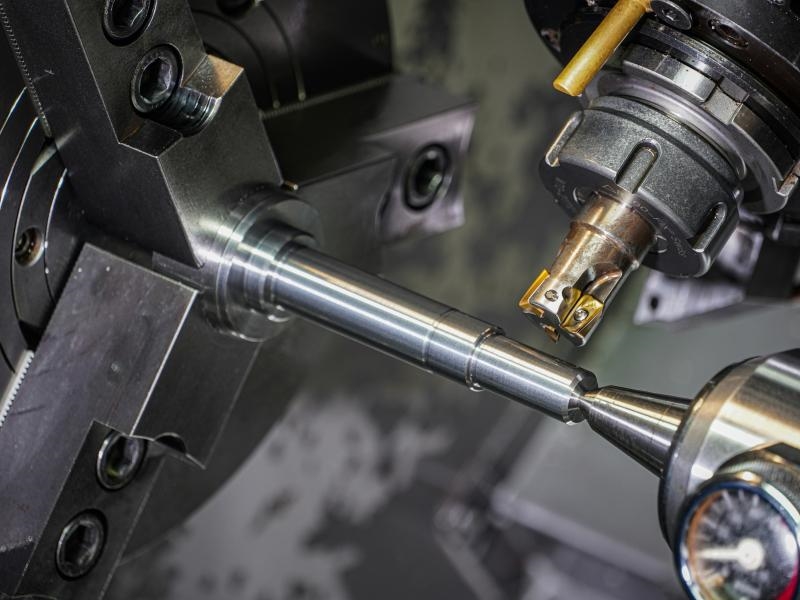
CNC Turn-Mill Machining for Accurate Components
The manufacturing process directly affects the dimensional accuracy of mould components. CNC turn-mill machining combines turning and milling operations, allowing complex geometries to be produced with controlled dimensional precision. Moreover, this process is suitable for components that require both cylindrical features and detailed machined sections. With a tolerance of ±0.001 mm, the components can meet demanding mould assembly requirements. As a result, manufacturers can achieve more consistent component fitting and reduce dimensional variations that may contribute to injection molding defects.
How Tight Tolerances Reduce Scrap
Scrap often occurs when mould components do not maintain the required dimensions during production. For example, inaccurate component geometry can lead to uneven wall thickness, thread deformation, flash, or poor alignment. Consequently, controlling critical dimensions during machining can help prevent these problems before they reach the injection molding stage. The ±0.001 mm tolerance offered by these components provides a high level of dimensional control. Furthermore, consistent machining accuracy helps maintain the intended relationship between different mould components, supporting stable production over repeated cycles.
Surface Roughness and Moulding Performance
Dimensional accuracy is only one part of precision mould manufacturing. Surface quality can also influence friction, material release, and the appearance of moulded components. These bottle cap mould parts can achieve a surface roughness of Ra 0.05 μm, providing an exceptionally smooth working surface. Therefore, the refined finish can help reduce friction between interacting mould components and support smoother demolding. In addition, a smoother surface may reduce areas where residues or processing material could accumulate, helping maintain more consistent mould operation.
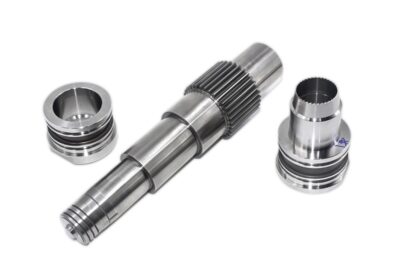
Key Precision Factors That Help Reduce Scrap
Several manufacturing characteristics contribute directly to mould performance and production consistency:
- Tight dimensional tolerance: ±0.001 mm tolerance helps maintain accurate component geometry and assembly.
- CNC turn-mill machining: Combined machining operations support complex and precise mould component structures.
- Ultra-smooth surface: Ra 0.05 μm surface roughness helps reduce friction and support stable mould movement.
- Suitable mould materials: S136, 420 ESR, 1.2083, and 4Cr13 provide options for different production requirements.
- Composite surface treatment: Hard chrome and mirror polishing improve surface characteristics for repeated moulding.
- Custom manufacturing: Components can be produced according to specific drawings and technical requirements.
Material Selection for Long-Term Mould Stability
Material selection also affects the service performance of mould components. S136, 420 ESR, 1.2083, and 4Cr13 are available for different application requirements. Each material can be selected according to factors such as mould structure, production conditions, and expected service demands. Moreover, appropriate material selection combined with accurate machining can help maintain component stability during repeated injection cycles. Consequently, manufacturers can reduce dimensional changes that could otherwise contribute to inconsistent moulded bottle caps.
Hard Chrome and Mirror Polishing Composite Treatment
Surface treatment provides another layer of performance optimization. The components use a hard chrome and mirror polishing composite treatment to improve the working surface. Hard chrome provides a hardened surface layer, while mirror polishing creates a highly refined finish. Furthermore, the combination can help improve surface durability and reduce friction during repeated mould movement. As a result, the treatment supports the long-term performance of precision mould components while maintaining the smooth surface required for demanding bottle cap applications.
Precision Engineering and Injection Molding Scrap
Scrap reduction starts before plastic enters the injection mould. If critical mould components are manufactured with inconsistent dimensions, defects can become difficult to eliminate through machine parameter adjustments alone. Therefore, precision engineering provides a strong foundation for stable injection molding. High-precision bottle cap mold parts help maintain accurate component relationships and consistent mould geometry. Consequently, manufacturers can reduce the risk of defects caused by dimensional mismatch, positioning problems, or unstable component movement.
Comparing Key Manufacturing Specifications
The following table shows how the main specifications can contribute to injection molding performance:
| Manufacturing Specification | Capability | Production Benefit |
|---|---|---|
| Processing Type | CNC Turn-Mill Machining | Supports complex precision geometries |
| Tolerance | ±0.001 mm | Improves dimensional consistency |
| Surface Roughness | Ra 0.05 μm | Supports smooth mould movement |
| Maximum Diameter | 300 mm | Accommodates various component sizes |
| Maximum Machining Size | 800 mm | Supports larger custom components |
| Materials | S136 / 420 ESR / 1.2083 / 4Cr13 | Provides application flexibility |
| Surface Treatment | Hard Chrome + Mirror Polishing | Enhances surface performance |
Support Consistent Thread and Cap Geometry
Bottle caps often contain detailed threads and sealing structures that require accurate mould geometry. Any mismatch between mating components can affect the final shape of the cap. Therefore, precision machining helps maintain the dimensional relationships required for accurate plastic forming. In addition, a smooth surface finish can support more stable material release during demolding. As a result, high-precision bottle cap mold parts can contribute to consistent thread formation, dimensional accuracy, and overall moulding quality.
Custom Components for Different Mould Designs
Bottle cap manufacturers may require different component sizes, geometries, and material specifications depending on their mould designs. For this reason, custom precision machining can provide greater flexibility than standard components. Chuanchen Precision offers precision mould components using CNC turn-mill machining and supports different material and surface treatment requirements. Moreover, the machining capability supports a maximum diameter of 300 mm and a maximum machining size of 800 mm, allowing components to be produced for various mould structures.
Reduce Defects Through Better Component Control
Reducing scrap requires control across the entire injection molding process, and mould component quality is an important part of that equation. Accurate dimensions help maintain proper assembly, while smooth surfaces support stable movement and demolding. Furthermore, appropriate materials and surface treatments can improve component durability during repeated production. By combining these factors, manufacturers can create a more stable moulding environment and reduce avoidable production defects.
Conclusion
Precision engineering plays an important role in controlling quality during bottle cap injection molding. Tight ±0.001 mm tolerances help maintain dimensional accuracy, while CNC turn-mill machining supports complex mould component geometries. Meanwhile, Ra 0.05 μm surface roughness and hard chrome with mirror polishing provide a smooth and durable working surface. Ultimately, high-precision bottle cap mold parts can help manufacturers improve mould stability, reduce dimensional variation, and lower scrap rates during repeated injection molding production.
