


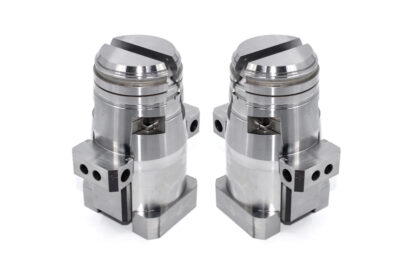
Bottle cap production requires highly accurate mould components because even small dimensional deviations can affect thread formation and demolding performance. In particular, collapsible cores must provide precise movement and reliable surface contact during the moulding cycle. Therefore, a bottle cap collapsible core needs carefully controlled machining to achieve accurate thread geometry and smooth demolding. Chuanchen Precision provides custom precision mould parts manufactured with CNC turn-mill machining, supporting demanding applications where dimensional accuracy and surface quality are essential.
Why Thread Demolding Requires High Precision
Bottle cap threads contain detailed profiles that must match the moulding design accurately. If the core geometry contains dimensional errors or surface defects, the finished cap may experience thread deformation, sticking, or inconsistent demolding. Consequently, precision machining plays an important role in maintaining the quality of the moulding process. A collapsible core allows the moulded cap to release by reducing its effective diameter before extraction. However, this mechanism requires accurate component dimensions and smooth contact surfaces to operate reliably.
CNC Turn-Mill Machining for Complex Core Geometry
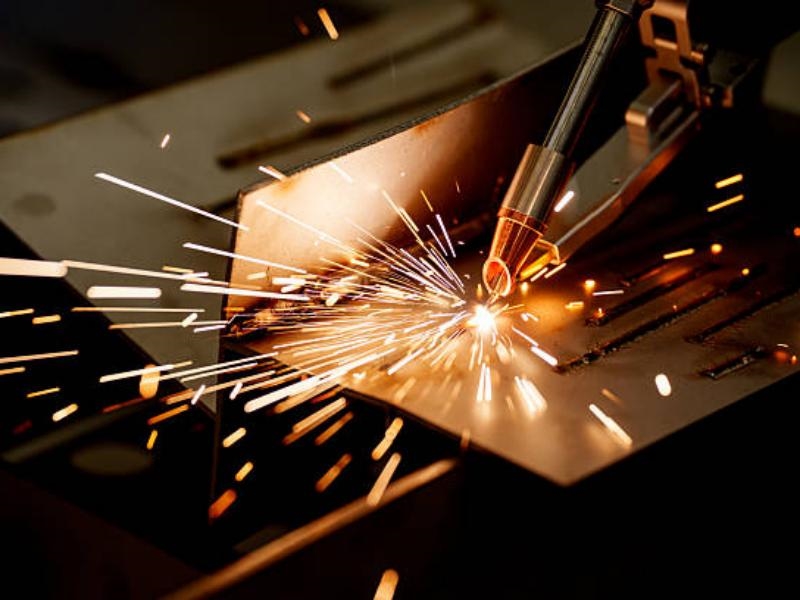
The product uses CNC turn-mill machining, which combines turning and milling capabilities to produce complex precision mould components. This machining method can support detailed cylindrical structures and intricate features within a controlled manufacturing process. Furthermore, CNC machining allows critical dimensions to be produced according to customized mould drawings and technical requirements. With a tolerance of ±0.001 mm, the component is designed for applications where tight dimensional control is necessary. As a result, manufacturers can achieve more consistent fitting and movement between mould components.
Smooth Surfaces Support Reliable Demolding
Surface quality is another important factor in collapsible core performance. Rough or uneven surfaces can increase friction between the core and moulded plastic, potentially affecting the release process. Therefore, the component is finished to a surface roughness of Ra 0.05 μm, providing an extremely smooth working surface. In addition, the hard chrome and mirror polishing composite treatment improves the surface characteristics of the component. Consequently, the combination of precision machining and high-quality finishing can help support smoother thread demolding.
Key Factors in Collapsible Core Performance
Several manufacturing factors directly influence the performance of a collapsible core used for bottle cap moulding:
- Dimensional accuracy: Tight tolerances help maintain proper alignment and component fitting.
- Thread geometry: Precise machining supports accurate replication of the required bottle cap thread profile.
- Surface roughness: A Ra 0.05 μm finish helps reduce surface friction during mould operation.
- Material selection: S136, 420 ESR, 1.2083, and 4Cr13 provide options for demanding mould applications.
- Surface treatment: Hard chrome combined with mirror polishing improves surface performance and finish quality.
- Custom machining: CNC turn-mill processing supports customized dimensions and complex mould component designs.
Material Options for Precision Mould Components
Material selection affects the durability and working performance of mould components. The available materials include S136, 420 ESR, 1.2083, and 4Cr13, which are commonly selected for precision mould applications requiring suitable hardness and wear resistance. Moreover, these material options allow manufacturers to select a material according to specific moulding conditions and production requirements. When combined with precision machining and appropriate surface treatment, the material can support stable operation during repeated moulding cycles.
Hard Chrome and Mirror Polishing Composite
Surface treatment can further improve the working characteristics of precision mould components. The bottle cap core uses a hard chrome and mirror polishing composite treatment to achieve a highly refined surface. Hard chrome provides a hardened surface layer, while mirror polishing creates a smooth finish suitable for precision mould applications. Therefore, this combination can help reduce friction and support consistent component movement. Additionally, the polished surface can contribute to improved appearance and easier maintenance of the working component.
Dimensional Capability for Customized Applications
Different bottle cap moulds require different component dimensions, so manufacturing flexibility is important for customized projects. The component supports a maximum diameter of 300 mm and a maximum machining size of 800 mm. This capacity allows the machining process to accommodate various mould component requirements. Furthermore, CNC turn-mill machining provides greater flexibility for producing customized geometries based on technical drawings. As a result, customers can develop mould components according to specific bottle cap designs and production conditions.
Comparison of Key Machining Specifications
The following table summarizes the main manufacturing specifications and their relevance to collapsible core applications:
| Specification | Provided Capability | Application Benefit |
|---|---|---|
| Processing Type | CNC Turn-Mill Machining | Supports complex precision geometries |
| Materials | S136 / 420 ESR / 1.2083 / 4Cr13 | Flexible material selection |
| Tolerance | ±0.001 mm | Supports precise component fitting |
| Maximum Diameter | 300 mm | Accommodates larger mould components |
| Maximum Machining Size | 800 mm | Supports various component dimensions |
| Surface Roughness | Ra 0.05 μm | Provides an extremely smooth surface |
| Surface Treatment | Hard Chrome + Mirror Polishing | Improves surface hardness and smoothness |
Support Consistent Bottle Cap Production
Consistent mould performance becomes increasingly important in high-volume bottle cap production. A bottle cap collapsible core must withstand repeated moulding cycles while maintaining its dimensional and surface characteristics. Therefore, manufacturers need to consider machining precision, material selection, surface treatment, and component size together rather than focusing on a single specification. With controlled CNC machining and precision finishing, the component can support stable mould operation and reliable thread formation over repeated cycles.
Custom Precision Mould Parts for Different Requirements
Every mould project may involve different thread profiles, dimensions, materials, and operating conditions. For this reason, custom manufacturing provides greater flexibility than relying only on standard components. Chuanchen Precision focuses on precision mould parts and can manufacture components according to customer drawings and technical specifications. Moreover, the combination of CNC turn-mill machining, tight tolerance control, and advanced surface finishing provides a suitable foundation for customized mould applications.
Achieve Smoother Thread Demolding
Smooth thread demolding depends on the interaction between accurate geometry, controlled movement, and low-friction surfaces. The collapsible structure helps reduce the core diameter before extraction, while precision machining ensures that critical dimensions remain within the required tolerance. Furthermore, the Ra 0.05 μm surface finish and hard chrome plus mirror polishing treatment help create a smooth working interface. Consequently, a bottle cap collapsible core manufactured with these precision-focused processes can help improve demolding consistency and reduce potential moulding issues.
Conclusion
Precision machining is essential when manufacturing collapsible cores for threaded bottle caps. Tight tolerances help maintain accurate geometry, while CNC turn-mill machining supports complex component structures. Meanwhile, suitable mould steels and hard chrome with mirror polishing provide a combination of durability and surface smoothness. Ultimately, a bottle cap collapsible core with controlled dimensions and refined surface quality can support smoother thread demolding, consistent mould performance, and reliable bottle cap production.
