


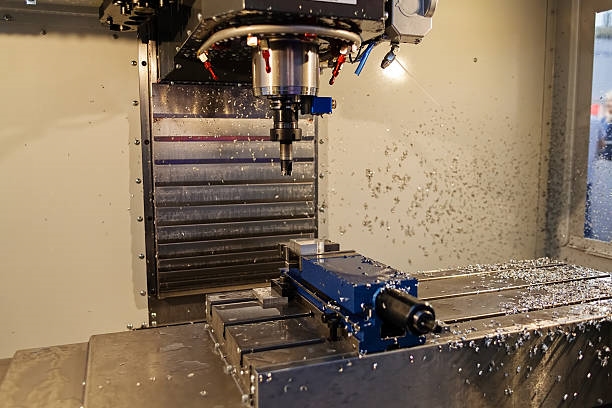
Precision mold components play an important role in injection molding, die casting, stamping, and other manufacturing processes. Even a small dimensional deviation can affect assembly, mold alignment, surface quality, and the final product. Therefore, selecting an appropriate machining method is essential when producing components that require tight tolerances and consistent geometry. Traditional machining has long been used for manufacturing metal parts. However, modern production increasingly requires more complex shapes, shorter lead times, and greater dimensional consistency. As a result, CNC turn-mill machining has become an attractive alternative for producing custom precision mold components with intricate features and demanding specifications.
What Is CNC Turn-Mill Machining?
CNC turn-mill machining combines turning and milling operations within one machining system. Instead of moving a workpiece between separate machines for different operations, multiple cutting processes can often be completed on the same platform. This integrated approach provides several advantages. First, it can reduce the number of workholding changes. Second, it can improve positional consistency between different features. Moreover, fewer machine transfers can simplify production workflows and reduce handling time. For mold components that contain cylindrical sections, slots, flats, holes, grooves, or other complex features, turn-mill machining can provide a more efficient manufacturing approach.
How Traditional Machining Works
Traditional machining commonly uses separate machines for individual operations. For example, a lathe may produce cylindrical features, while a milling machine creates slots, flat surfaces, or other non-round geometries. Additional drilling or finishing operations may then be required. This method can still be effective for simple components and low-complexity designs. However, each transfer between machines may introduce another positioning step. Consequently, maintaining precise alignment across multiple features can require additional inspection and setup work. Therefore, the best machining method depends on component geometry, production volume, tolerance requirements, and overall project complexity.
CNC Turn-Mill vs Traditional Machining
The main differences can be summarized through several practical factors:
- Process integration: CNC turn-mill systems combine multiple operations, while traditional machining often separates them.
- Setup requirements: Integrated machining can reduce repeated workholding and repositioning.
- Feature alignment: Fewer setups can help maintain the relationship between different machined features.
- Production efficiency: Complex components may require fewer machine transfers.
- Design flexibility: Turn-mill machining can handle components combining rotational and milled geometries.
- Consistency: CNC programming supports repeatable machining processes across production batches.
As a result, CNC turn-mill machining can be particularly useful when mold components require multiple machining operations with close positional relationships.
Comparison Table
| Factor | CNC Turn-Mill Machining | Traditional Machining |
|---|---|---|
| Machine Setup | Multiple operations can be integrated | Often requires separate setups |
| Workpiece Transfer | Reduced | More frequent |
| Feature Alignment | Strong consistency potential | Depends on repositioning accuracy |
| Complex Geometry | Well suited | May require several machines |
| Production Flow | More integrated | More segmented |
| Simple Components | Effective | Often cost-efficient |
| Complex Mold Parts | Highly practical | May require additional operations |
| Process Control | CNC-based repeatability | Varies by machine and workflow |
Better Alignment for Complex Mold Features
Mold components often contain several features that must work together accurately. A hole may need to align with a cylindrical section, while a slot or flat surface must maintain a precise relationship with another feature. With custom precision mold components, reducing unnecessary repositioning can help improve geometric consistency. CNC turn-mill machining can complete multiple features while maintaining the workpiece in a controlled setup. Furthermore, CNC programming allows machining parameters and tool paths to be repeated for subsequent parts. This can be especially useful for projects that require consistent dimensions across multiple production batches.
When Traditional Machining Still Makes Sense
Despite the advantages of CNC turn-mill machining, traditional machining should not be overlooked. Simple components with limited features may not require an integrated machining center. For example, a basic cylindrical pin may be efficiently produced using conventional turning. Similarly, a straightforward milled plate may not benefit significantly from turn-mill capabilities. Therefore, machining selection should be based on the actual component rather than simply choosing the newest technology. For uncomplicated parts, a traditional process may provide an efficient balance between machining time and production cost.
Why CNC Turn-Mill Can Improve Production Efficiency
For components that require turning, milling, drilling, and other operations, transferring the workpiece between several machines can increase production complexity. Each additional setup takes time and may require additional fixture preparation. CNC turn-mill machining can consolidate many of these operations. Consequently, manufacturers can potentially shorten production workflows while reducing repeated setup requirements. In addition, integrated machining can simplify quality control because multiple features are produced within a more controlled machining sequence. This is particularly valuable when dimensional relationships between features are critical.
Materials and Surface Requirements
Mold components can be manufactured from various engineering metals depending on application requirements. Common choices may include tool steel, stainless steel, alloy steel, aluminum, and other machinable materials. Material selection should consider hardness, wear resistance, corrosion resistance, dimensional stability, and the intended working environment. Moreover, surface treatment or finishing may be required to achieve the desired performance. After machining, processes such as polishing, grinding, coating, or heat treatment may be applied depending on the component design. Therefore, machining is only one part of the overall manufacturing process.
Quality Control for Precision Mold Components
Precision manufacturing requires consistent inspection throughout production. Dimensional measurements can verify critical diameters, lengths, hole positions, flatness, and other geometric requirements. For custom precision mold components, inspection is especially important because even minor dimensional deviations can influence mold assembly or production performance. Consequently, manufacturers should establish appropriate inspection procedures based on the component’s tolerance and functional requirements. CNC machining also provides the benefit of repeatable digital programs. Once the machining process has been properly validated, the same tool paths and parameters can support consistent production.
Choosing the Right Machining Method
The ideal machining process depends on several factors. Component geometry is one of the most important considerations, but production quantity, tolerance, material, finishing requirements, and delivery schedule also matter. For complex components containing both rotational and milled features, CNC turn-mill machining can provide a strong combination of flexibility and process integration. Conversely, simple geometries may be better suited to conventional machining methods. Therefore, manufacturers should evaluate the complete production process before selecting a machining solution.
Chuanchen Precision for Customized Mold Components
Chuanchen Precision focuses on precision machining solutions for customized components and complex manufacturing requirements. By combining CNC machining capabilities with controlled production processes, the company can support projects requiring accurate dimensions and consistent component quality. Furthermore, customized machining allows component geometry, material selection, finishing requirements, and production specifications to be matched with the intended application.
Conclusion
Machining technology has a direct influence on the quality, consistency, and production efficiency of mold components. Traditional machining remains practical for simple geometries, while CNC turn-mill machining provides greater process integration for parts that combine turning and milling features.
Ultimately, the choice should depend on the component’s geometry, tolerance, material, production volume, and finishing requirements. For complex custom precision mold components, an integrated CNC turn-mill process can reduce unnecessary setups, improve feature alignment, and create a more efficient manufacturing workflow. By selecting the right machining strategy and maintaining reliable quality control, manufacturers can produce precision mold components that meet demanding dimensional and functional requirements.
