


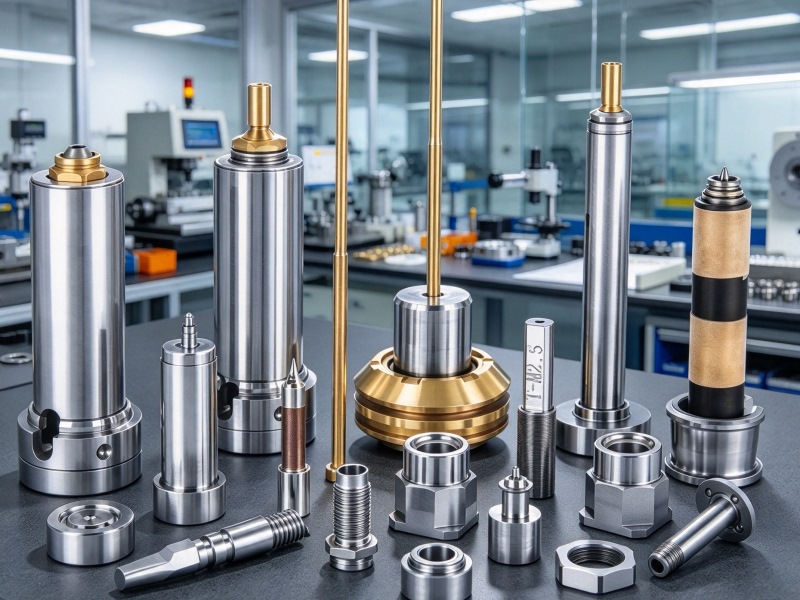
Injection molding manufacturers often need to select the right runner system to balance production efficiency, material usage, and product quality. Hot runner and cold runner systems are two common approaches used in plastic injection molding, and each has different advantages depending on production requirements. While cold runner systems remain popular because of their simple structure and lower initial investment, hot runner solutions provide better material efficiency and faster cycle performance for high-volume production. Therefore, choosing suitable components such as hot runner mold inserts is essential for achieving stable molding results and improving overall manufacturing efficiency.
Chuanchen Precision specializes in precision mold components and custom injection mould system parts for global manufacturers. With advanced grinding technology, strict tolerance control, and professional surface treatment, the company supports customers in developing reliable molding solutions for various industries.
How Hot Runner Mold Inserts Improve Production Efficiency
Hot runner systems maintain plastic materials in a heated channel before injection, allowing molten resin to flow directly into the mold cavity without creating runner waste. As a result, manufacturers can reduce material consumption and improve production efficiency, especially when producing large quantities of plastic parts. The use of hot runner mold inserts helps ensure precise melt flow control while maintaining stable injection performance.
Moreover, hot runner inserts require excellent dimensional accuracy and surface quality because they operate under high temperature and pressure conditions. Chuanchen Precision produces precision hot runner mold parts using materials such as S136, 420 ESR, 1.2083, and 4Cr13. With a machining tolerance of ±0.001 mm and surface roughness reaching Ra 0.05 μm, these components support consistent molding performance and long-term reliability.
Cold Runner Systems Offer Simplicity and Flexibility
Cold runner systems use traditional channels that cool together with the molded part before removal. This structure makes them easier to design, maintain, and repair, which is why they are widely used in small-batch production and applications with frequent material changes. Furthermore, cold runner molds generally require lower upfront costs compared with hot runner solutions. However, cold runner systems generate additional runner waste after each molding cycle. Therefore, manufacturers may need extra steps for recycling or processing leftover materials. For businesses producing high-volume parts, the increased material usage and longer cycle time can influence overall production costs.
| Comparison Factor | Hot Runner System | Cold Runner System |
|---|---|---|
| Material Waste | Minimal runner waste | Generates additional runner material |
| Production Speed | Faster cycle performance | Relatively longer cycle time |
| Initial Cost | Higher equipment investment | Lower setup cost |
| Maintenance | Requires professional servicing | Easier maintenance |
| Suitable Applications | High-volume production | Small batches and flexible production |
Surface Treatment Ensures Long-Term Mold Performance
The performance of mold inserts depends not only on design but also on manufacturing quality and surface treatment. During injection molding, components experience repeated friction, heat exposure, and pressure changes. Therefore, durable surface finishing is important for extending component lifespan and maintaining stable production. The precision hot runner mold parts from Chuanchen Precision use a hard chrome and mirror polishing composite treatment. This process improves wear resistance, reduces surface friction, and enhances corrosion protection. Consequently, manufacturers can achieve smoother material flow and reduce maintenance requirements during continuous production.
Key manufacturing advantages include:
- High precision grinding: Maintains accurate dimensions for complex mold applications.
- Premium material options: Supports demanding temperature and pressure environments.
- Mirror polishing surface: Improves smoothness and reduces friction.
- Hard chrome treatment: Enhances durability and wear resistance.
Choosing the Right Solution for Your Injection Molding Process
The choice between hot runner and cold runner systems depends on factors such as production volume, material type, product design, and budget considerations. For example, manufacturers producing automotive parts, medical components, electronic housings, or consumer products in large quantities may benefit from the efficiency of hot runner systems. In contrast, companies handling prototypes or low-volume production may find cold runner systems more practical.
| Production Requirement | Recommended System | Reason |
|---|---|---|
| Large-scale manufacturing | Hot Runner | Reduces waste and improves efficiency |
| Prototype production | Cold Runner | Lower cost and easier adjustment |
| Complex plastic parts | Hot Runner | Provides better flow control |
| Frequent material changes | Cold Runner | Offers greater flexibility |
By evaluating production goals carefully, manufacturers can select a runner system that matches their operational needs. Additionally, using high-quality mold components helps ensure that either system delivers stable and reliable results.
Chuanchen Precision Supports Customized Mold Component Solutions
For injection molding companies, reliable components are critical to maintaining consistent production quality. Chuanchen Precision provides customized mold parts with advanced grinding, strict tolerance control, and professional surface treatments. The company’s hot runner components are designed to meet demanding manufacturing requirements while supporting efficient molding operations. With maximum machining sizes up to 800 mm and precision control of ±0.001 mm, these mold components suit various high-performance applications. Furthermore, customized solutions allow manufacturers to optimize mold structures according to different production conditions and product requirements.
Conclusion
Hot runner and cold runner systems both have important roles in injection molding, but their advantages vary depending on production needs. Hot runner solutions can provide better material efficiency and faster production for large-volume manufacturing, while cold runner systems remain suitable for flexible and cost-sensitive projects. By selecting high-quality hot runner mold inserts and precision-engineered components, manufacturers can improve molding stability, reduce waste, and achieve better production performance. With professional manufacturing capabilities, Chuanchen Precision helps customers develop reliable injection molding solutions for modern industrial applications.
