


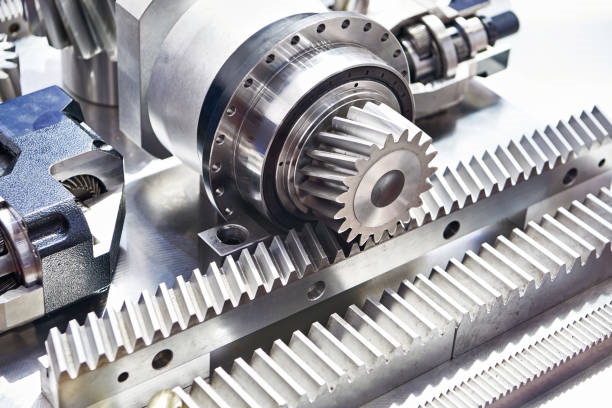
Modern injection molding often involves products with internal or external threads, such as caps, fittings, connectors, closures, and other threaded plastic components. These designs require a controlled demolding process because simply pulling the molded part from the cavity can damage the threads or deform the finished product. Therefore, specialized unscrewing mold parts are commonly used to rotate threaded components out of the mold. Among different mechanisms, rack and pinion systems provide a practical way to convert linear movement into controlled rotational motion. As a result, manufacturers can achieve smoother demolding while supporting repeatable production cycles.
How Rack and Pinion Demolding Works
A rack and pinion mechanism consists of a straight-toothed rack and a circular gear. During the mold cycle, the rack moves in a linear direction and engages with the pinion gear. This interaction converts the rack’s linear movement into rotational movement. The rotating pinion can then drive a threaded core or other mold component. Consequently, the molded product can be unscrewed from the core rather than being forced out directly. This approach is especially useful for threaded products because the rotation follows the geometry of the molded thread. Furthermore, controlled rotation can help reduce stress on the finished part and improve demolding consistency.
Key Benefits of Rack and Pinion Demolding
Rack and pinion systems offer several advantages for injection molding applications:
- Controlled rotation: Converts linear mold movement into predictable rotational motion.
- Smooth demolding: Helps release threaded products without excessive pulling force.
- Repeatable operation: Supports consistent movement across production cycles.
- Mechanical simplicity: Uses a straightforward gear-and-rack transmission structure.
- Space efficiency: Can be integrated into suitable mold structures without overly complex mechanisms.
- Reduced thread damage: Controlled unscrewing helps protect molded thread profiles.
- Production efficiency: Supports automated demolding within the molding cycle.
Together, these advantages make rack and pinion mechanisms a practical option for molds that require reliable threaded-part release.
Comparison with Traditional Demolding Methods
Different demolding methods may be suitable for different product geometries. However, threaded products require additional consideration because the molded part must follow a rotational release path.
| Demolding Method | Main Motion | Threaded Product Suitability | Production Benefit |
|---|---|---|---|
| Direct Ejection | Linear | Limited | Simple for non-threaded parts |
| Manual Unscrewing | Manual rotation | Suitable for low volume | Flexible but slower |
| Rack and Pinion | Linear-to-rotational | Highly suitable | Automated and repeatable |
| Hydraulic Unscrewing | Hydraulic rotation | Highly suitable | Strong control for complex molds |
| Motor-Driven System | Motor rotation | Highly suitable | Precise rotational control |
For high-volume production, automated mechanisms can provide significant advantages because they reduce manual intervention. Therefore, rack and pinion demolding can be particularly valuable when consistent cycle times are important.
How Rack and Pinion Improves Production Efficiency
Production efficiency depends on more than reducing individual machining or molding times. The complete mold cycle must operate smoothly, consistently, and with minimal interruptions. A rack and pinion system can integrate the unscrewing mold parts process into the mold’s movement sequence. As the rack moves, the pinion rotates the threaded core, allowing the molded component to release in a controlled manner. As a result, operators may spend less time dealing with manual demolding or thread-related defects. In addition, automated movement can help create more predictable cycle conditions.
Protecting Thread Quality During Demolding
Threaded products require precise demolding because the thread profile must remain intact after release. Excessive pulling force or incorrect ejection movement can potentially cause deformation, scratches, or other defects. With controlled rotational demolding, the threaded core follows the natural direction of the molded thread. Therefore, the finished component can separate from the core more smoothly. Moreover, proper alignment between the rack, pinion, and threaded core is important. Accurate component positioning helps ensure that rotational movement remains stable throughout the demolding process.
Precision Components Are Essential
The performance of a rack and pinion mechanism depends heavily on the quality of its individual components. Gear teeth, racks, shafts, cores, and related mold parts must work together accurately. For this reason, precision manufacturing plays an important role in mold mechanism reliability. Dimensional accuracy, tooth profile consistency, surface finish, and material selection can all influence the final performance.
Chuanchen Precision focuses on precision mold component manufacturing for applications that require accurate dimensions and dependable mechanical operation. By controlling machining and inspection processes, the company can support customized mold component requirements.
Material and Surface Treatment Considerations
Rack and pinion components experience repeated mechanical movement during mold operation. Therefore, appropriate materials should be selected according to load, wear, operating frequency, and mold conditions. Tool steel and other wear-resistant materials can be used for components that require greater durability. In addition, grinding, polishing, heat treatment, or other surface processes may be applied depending on the component’s functional requirements. Furthermore, proper surface treatment can improve contact conditions between moving components. This may help reduce friction and maintain more stable mechanical movement during repeated molding cycles.
Design Considerations for Rack and Pinion Systems
Successful rack and pinion demolding requires careful consideration of several design factors. The gear ratio, rack travel, pinion diameter, thread pitch, rotational distance, and available mold space should all be evaluated during mold design. For example, the rotational movement must be sufficient to release the molded thread completely. At the same time, the mechanism should avoid unnecessary movement that could increase the mold cycle time.
In addition, accurate alignment is essential. Misalignment between the rack and pinion may result in uneven movement or accelerated component wear. Therefore, precision machining and careful assembly are important for reliable operation.
Applications for Unscrewing Mold Mechanisms
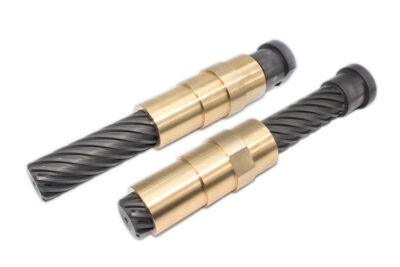
Rack and pinion demolding can be used for a wide variety of threaded injection-molded products. Common applications include plastic bottle caps, threaded connectors, pipe fittings, closures, housings, and technical plastic components. The mechanism is particularly useful when products are manufactured in large quantities and require consistent thread quality. Moreover, automated demolding can reduce manual handling and support a more efficient production workflow. As a result, unscrewing mold parts can play an important role in molds designed for complex threaded products.
Customized Solutions for Different Mold Designs
Every mold has different space limitations, product dimensions, thread specifications, and cycle requirements. Therefore, standard mechanisms may not always provide the best solution. Customized mold components can be manufactured according to drawings, thread dimensions, material requirements, and specific assembly conditions. This allows the rack and pinion mechanism to be integrated more effectively into the overall mold structure. Chuanchen Precision can support customized precision components for mold applications where dimensional accuracy and mechanical compatibility are important.
Building More Efficient Molding Systems
As manufacturers continue to improve production efficiency, automated demolding mechanisms are becoming increasingly important. Rack and pinion systems offer a straightforward method for converting linear mold movement into controlled rotation. When properly designed and manufactured, these mechanisms can help protect threaded product geometry, reduce manual intervention, and support repeatable production cycles. Ultimately, high-quality unscrewing mold parts combined with accurate rack and pinion design can provide a reliable solution for threaded injection molding. By considering component precision, material selection, alignment, and overall mold integration, manufacturers can create demolding systems that improve both product quality and production efficiency.
