


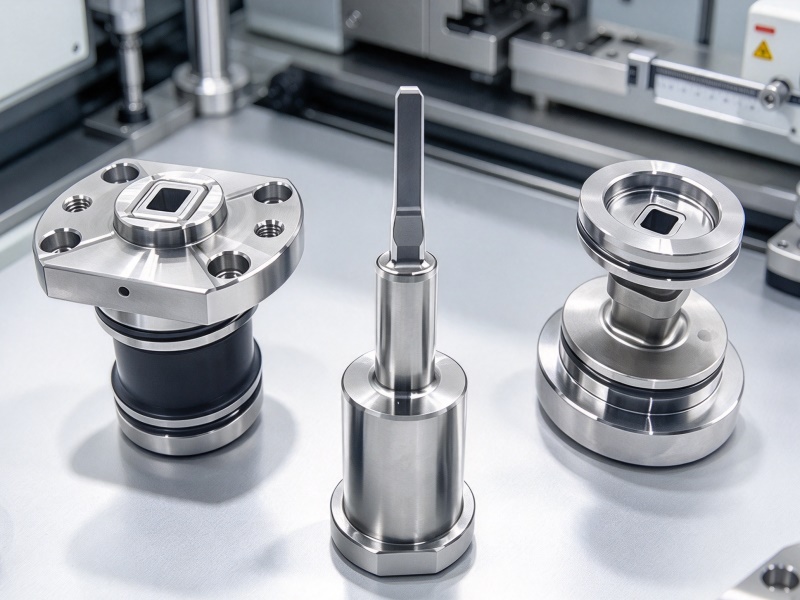
Medical consumables require precise dimensions, smooth surfaces, and consistent quality. Therefore, their molds must meet strict manufacturing requirements. Common applications include reaction cups, laboratory containers, and other medical plastic components. Medical consumables mold parts influence product geometry, surface appearance, and production consistency. However, tiny defects can affect mold performance. These include micro-cracks and machining marks that may cause problems during repeated production cycles.
Mirror electrical discharge machining (EDM) uses controlled electrical discharges to remove material from conductive workpieces. Unlike conventional cutting, it does not require direct contact between the tool and workpiece. As a result, EDM can process intricate cavities and fine details. These features may be difficult to machine using traditional methods. When properly controlled, mirror EDM can improve surface finish and reduce certain defects. However, eliminating every micro-crack also requires suitable materials, machining parameters, and inspection.
How Mirror EDM Helps Reduce Micro-Cracks
Micro-cracks may result from material defects, machining stress, or unsuitable discharge parameters. Improper heat treatment can also contribute to surface problems. During EDM, each electrical discharge generates localized heat. This heat melts or vaporizes a small amount of material. Unsuitable energy settings or inadequate finishing may leave microscopic cracks, craters, or a heat-affected layer. Therefore, manufacturers must carefully control discharge energy and pulse duration. Electrode condition and finishing stages also require attention.
Mirror EDM uses successive machining stages to refine the surface. During finishing, manufacturers can gradually reduce discharge energy. This approach lowers surface roughness and may limit certain EDM-related defects. However, mirror EDM cannot automatically eliminate every existing micro-crack. Deeper material defects and improper heat treatment may require other corrective measures. Therefore, manufacturers should combine optimized machining with material inspection. Final surface evaluation is also essential to verify compliance with the required specifications. For medical consumables mold parts, careful surface inspection helps identify defects that may affect mold performance and product quality.
Key Benefits of Mirror EDM for Medical Mold Components
High-quality cavity surfaces support consistent molding performance. This is especially important when molds must reproduce fine details over many production cycles. Mirror EDM can help refine intricate surfaces and complex geometries. Moreover, it supports the finishing of precision mold inserts. These components may require smooth transitions, detailed contours, and controlled surface characteristics.
The main potential benefits include:
- Improved surface finish: Fine EDM finishing can reduce surface roughness and visible machining marks on suitable materials.
- Better control of fine features: EDM can process intricate cavity geometries that conventional cutting tools may struggle to reach.
- Reduced surface-related defects: Optimized machining can help limit certain EDM-related imperfections. Results depend on the material and process conditions.
- Consistent cavity quality: Controlled processing and inspection help maintain uniform surface characteristics across mold components.
- Support for maintenance planning: Regular inspections can identify wear and emerging defects before they affect production quality.
However, these benefits depend on several factors. These include material grade, heat treatment, component geometry, and machining parameters. Inspection methods also affect the results. Accordingly, manufacturers should validate each process against the mold’s specific requirements. One finishing method may not deliver identical results for every application.
Material Selection and Surface Treatment
Material selection is important for medical mold components. Hardness, corrosion resistance, polishing performance, and dimensional stability all influence tooling performance. Depending on the application, manufacturers may consider S136, 420 ESR, 1.2083, and 4Cr13. These materials can be used for suitable precision mold inserts and cavity components. In addition, proper heat treatment helps establish the required mechanical properties. The final choice should reflect the component design and production environment. Resin requirements and maintenance conditions also matter.
Surface treatment may further improve the performance of suitable mold components. For example, a hard chrome and mirror-polishing composite treatment may suit certain applications. However, compatibility depends on the material and intended use. Surface treatment cannot compensate for poor material quality or unsuitable machining parameters. It also cannot correct every existing structural defect. Therefore, manufacturers should coordinate material selection, heat treatment, EDM finishing, and final inspection. Together, these steps support a more complete tooling process. Proper material selection also helps medical consumables mold parts maintain dimensional stability during repeated production cycles.
The following table summarizes key factors affecting cavity surface quality.
| Manufacturing factor | Role in surface quality |
|---|---|
| Material selection | Influences hardness, corrosion resistance, and polishing capability |
| Heat treatment | Establishes mechanical properties and affects dimensional stability |
| EDM parameters | Affect surface roughness, discharge craters, and potential thermal damage |
| Mirror finishing | Refines surfaces and reduces certain machining marks |
| Surface inspection | Helps identify visible or measurable defects |
| Preventive maintenance | Helps detect wear and surface deterioration during service |
Precision Mold Inserts and Quality Inspection
Precision mold inserts require careful dimensional control. Even small deviations can affect the final molded product. For suitable features, a tolerance of ±0.001 mm may be achievable. However, this depends on manufacturing and measurement conditions. This tolerance should not be assumed to apply to every dimension. Similarly, Ra 0.05 μm may be specified for certain mirror-finished surfaces. Actual results depend on process capability and verification. Therefore, approved drawings should define critical dimensions and surface requirements. They should also specify the methods used to verify compliance.
Chuanchen Precision provides mold component processing for projects requiring mirror EDM and precision machining. Its capabilities also include specialized cavity finishing. The maximum machining size is 800 mm, while the maximum diameter is 300 mm. Actual capacity depends on component geometry and setup requirements. Before production, customers should provide drawings and material specifications. Critical tolerances and surface finish requirements should also be included. This information helps establish a suitable process. It also ensures that inspection criteria match the intended application.
Conclusion
Mirror EDM can improve cavity surfaces by refining intricate features and reducing certain machining-related defects. For medical consumables mold parts, optimized EDM parameters can help reduce surface defects. Suitable materials, heat treatment, and surface inspection are also essential. However, preventing micro-cracks requires a complete manufacturing strategy. Mirror finishing alone cannot guarantee defect-free surfaces. By combining precision machining with effective quality control, manufacturers can improve tooling reliability. These measures also help maintain the surface characteristics required for medical consumable production.
