


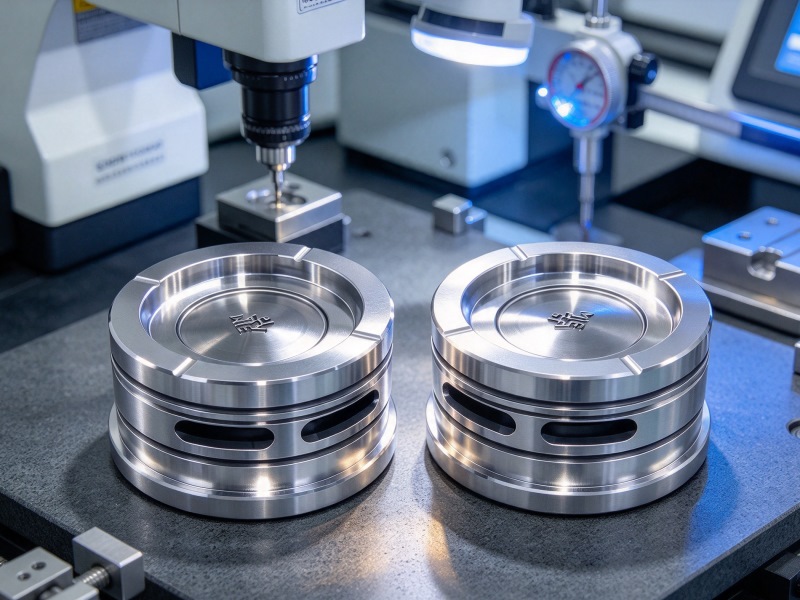
A multi-cavity bottle cap mold enables manufacturers to produce multiple plastic caps during a single injection molding cycle, improving production efficiency while maintaining consistent output. However, as the number of cavities increases, the demands on dimensional accuracy, surface finishing, and mold maintenance also become greater. The injection mold core forms the internal features of each cap, while the injection mold cavity defines its external geometry and surface details. Therefore, precise machining and carefully controlled finishing are essential for producing uniform caps and supporting reliable long-term operation.
Mirror electrical discharge machining (EDM) is widely used for refining intricate features in conductive mold materials. Unlike conventional cutting, EDM removes material through controlled electrical discharges between an electrode and a conductive workpiece. As a result, it can process complex geometries without direct cutting contact and achieve fine surface finishes when suitable machining parameters are applied. For manufacturers producing plastic closures at scale, this process can help improve surface consistency and reduce certain finishing challenges.
How Mirror EDM Improves Core and Cavity Surface Quality
Surface quality directly influences several aspects of mold performance, including demolding, cleaning, and molded-part appearance. Rough machining marks or localized imperfections may increase friction or contribute to material buildup, particularly during repeated production cycles. Mirror EDM helps refine complex surfaces and detailed features that may be difficult to finish using conventional machining methods alone. Furthermore, consistent surface finishing across different cavities can support more uniform product quality. For this reason, a multi-cavity bottle cap mold requires uniform surface finishing to help maintain consistent cap quality across all cavities.
A carefully finished mold surface may also reduce certain release problems, depending on the resin, mold geometry, and operating conditions. Nevertheless, a smooth surface does not independently guarantee a longer service life. Material properties, heat treatment, injection pressure, cooling conditions, and maintenance practices also affect wear and performance. Therefore, manufacturers should combine mirror EDM with appropriate engineering design and regular inspection to achieve reliable results.
Key Benefits of Mirror EDM for Mold Components
Mirror EDM can contribute to improved mold performance when the process is selected according to the component design and production requirements. In particular, the following benefits explain why manufacturers may choose this finishing method for precision tooling.
- Improved surface finish: Controlled electrical discharge machining can reduce machining marks and produce smoother surfaces on suitable conductive materials.
- Detailed feature processing: EDM can create intricate geometries and fine features that may be difficult to reach with conventional cutting tools.
- More consistent demolding: A suitable surface finish may help reduce friction-related release issues when combined with correct draft angles and mold design.
- Better cavity-to-cavity consistency: Consistent machining and finishing procedures help maintain similar surface conditions across multiple forming positions.
- Support for maintenance planning: Appropriate finishing and inspection can help identify potential surface issues before they affect production quality.
However, these benefits depend on material selection, machining parameters, mold structure, and actual production conditions. Consequently, manufacturers should evaluate EDM as part of a complete tooling strategy rather than treating it as the only factor that determines mold durability.
Material Selection and Surface Treatment
Material selection is essential when manufacturing bottle cap mold parts because different steels offer different combinations of hardness, corrosion resistance, and polishing performance. Depending on the application, materials such as S136, 420 ESR, 1.2083, and 4Cr13 may be considered for mold cores, cavities, and inserts. In addition, suitable heat treatment helps establish the mechanical properties required for repeated injection molding cycles. The final material choice should reflect the intended resin, production volume, operating environment, and expected maintenance requirements.
A hard chrome and mirror-polishing composite treatment may also be considered when it is compatible with the material and application. Nevertheless, surface treatment should be selected according to functional requirements rather than applied automatically to every component. The following table summarizes the main manufacturing factors that influence mold performance.
| Manufacturing factor | Contribution to mold performance |
|---|---|
| Mirror EDM | Refines intricate features and improves surface finish |
| Material selection | Influences hardness, corrosion resistance, and polishing capability |
| Heat treatment | Helps establish the required mechanical properties |
| Surface treatment | May improve surface characteristics when suitable for the application |
| Dimensional inspection | Verifies geometry and consistency across mold components |
| Preventive maintenance | Helps identify wear, deposits, and damage during service |
As a result, coordinating material selection, machining, heat treatment, and surface finishing can provide a more reliable foundation for long-term tooling performance.
Maintaining Accuracy Across Multi-Cavity Mold Components
In high-volume production, small differences between individual cavities can lead to variations in cap dimensions, appearance, or fit. Therefore, multi-cavity mold components require careful machining, consistent finishing, and appropriate dimensional inspection before assembly. Precision mold parts should be checked against approved drawings, including critical dimensions, tolerances, and surface roughness requirements. For applicable features, a stated tolerance of ±0.001 mm may be achievable under suitable manufacturing and inspection conditions, although this tolerance should not be assumed to apply universally to every dimension. Therefore, each multi-cavity bottle cap mold should undergo careful dimensional inspection to verify that critical features meet the approved drawing requirements.
To maintain consistent production quality, manufacturers should pay attention to several practical considerations.
- Cavity alignment: Verify the relationship between mating cores and cavities to reduce uneven wear and dimensional variation.
- Surface inspection: Confirm that finished surfaces meet the agreed roughness and appearance requirements.
- Dimensional verification: Measure critical features according to the approved drawings and inspection methods.
- Production monitoring: Review molded samples and operating conditions to identify emerging quality issues early.
Furthermore, regular inspection can help detect wear or material buildup before these issues cause widespread defects. This is particularly important for molds with many cavities, where a small inconsistency can affect a substantial number of finished products.
Custom Mold Inserts and Manufacturing Capabilities
Mirror EDM is also used for specialized tooling applications, including medical and laboratory mold inserts that require complex geometries and controlled surface finishes. Chuanchen Precision provides precision mold component processing for projects involving detailed machining, mirror EDM, and surface finishing. The supplied processing capabilities include a maximum machining size of 800 mm and a maximum diameter of 300 mm, subject to component design and setup requirements. In addition, a stated surface roughness of Ra 0.05 μm may be specified for suitable finishing applications, while the achievable result should be confirmed for each part.
Sample lead time is approximately 7–10 days, and production lead time is approximately 15–20 days, depending on material availability, machining complexity, and order specifications. Materials may include S136, 420 ESR, 1.2083, and 4Cr13, according to the project’s technical requirements. Before production begins, customers should provide drawings, material preferences, critical tolerances, surface finish requirements, and intended operating conditions. This information helps establish a suitable manufacturing process and clarify the inspection criteria for each component.
Conclusion
Mirror EDM can improve the surface quality of mold cores and cavities by refining intricate features and reducing machining marks on suitable conductive materials. For a multi-cavity bottle cap mold, these improvements may support consistent product appearance and smoother demolding when combined with suitable materials, accurate mold design, appropriate heat treatment, and regular maintenance. Moreover, careful inspection of every cavity helps control dimensional variation during high-volume production. By integrating precision machining with effective quality control, manufacturers can support reliable mold performance and make informed decisions about long-term tooling maintenance.
